

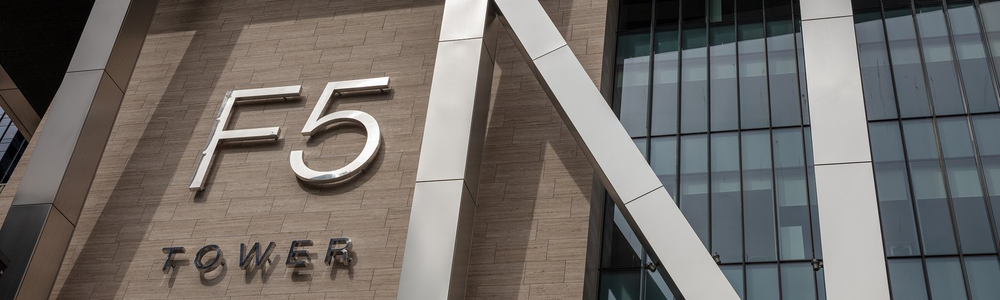
F5 saw its stock dip 7% in after-hours trading following the security firm’s first earnings report after its recently revealed cybersecurity attack.
The vendor was the subject of a recent attack from China-linked hackers who are believed to have had access to F5’s network for at least a year.
Despite posting solid results for its most recent fourth-fiscal quarter, which saw revenue rise by 8.5% year-over-year, investors punished F5. The firm projected revenue guidance of $755 million for Q1 2026, a drop of 1.5% year-over-year and below analyst expectations.
Analysts at financial firm William Blair pointed squarely at the recent security breach as the reason for the underwhelming forecast, warning that “substantial fallout” from the incident is likely to compound F5’s growth going into the first half of fiscal 2026.
“Although the breach had no material impact on fourth-quarter revenues, management expects near-term disruption to normal sales cycles as a result of the incident (delayed upgrades, more limited expansions, customer churn),” William Blair analysts wrote. “While the full impact of the breach is still unclear, management has taken a cautious approach to its forecast, which should create a more achievable growth trajectory in fiscal 2026.”
Revenues rise, but competition looms
The security breach marked what CEO François Locoh-Donou described as an otherwise “exceptional year” for F5.
The vendor saw full-year revenues rise 10% to $3.09 billion.
It was F5’s systems offerings that helped drive growth in 2025, which saw revenues jump to $706 million. Behind that growth were enterprise refresh cycles for its VIPRION application delivery controller (ADC) and iSeries platform.
It was more modest growth for F5’s software and global services units, however. The vendor’s software unit grew by 9% YoY to $803 million, while its global services only grew by 2%.
Following the recent security incident, however, Locoh-Donou said F5’s priority will be focusing on supporting customers.
“We are raising the bar on security across all aspects of our business,” the CEO told investors. “We are committed to learning from this incident, sharing our insights with customers and peers, and driving collaborative innovation to strengthen the protection of critical infrastructure.”
While it picks up the pieces following the high-profile breach, analysts at William Blair warn F5 faces potentially increased competition, particularly from communications service providers (CSPs).
The financial firm also predicts further competition within the security market, along with some uncertainty around its AI efforts.
Like several of its contemporaries, F5 is doubling down on the AI boom, integrating AI-enhanced observability and threat detection capabilities in its Distributed Cloud Platform (DCS) and BIG-IP Next products.
William Blair analysts, however, suggest it may be some time before those integrations pay off, writing: “Despite management noting some early AI experimentation across financial services, telecom, and large SaaS (software-as-a-service )providers, we believe it will still be another 12-18 months before there is an inflection in enterprise AI inference adoption.”

Comments