


LAS VEGAS – Everpure (formerly Pure Storage) unveiled the next step in its data management evolution with a “data primacy architecture” offering.
Showcased at the company’s annual Pure Accelerate conference, Everpure’s Data Intelligence platform sees the flagship platform of the recently acquired 1Touch augmented to help enterprises move away from application-centric data silos and toward a governed, AI-ready data foundation.
Billed as a way for users to gain actionable context out of fragmented enterprise data, the offering adds a cross‑environment contextual layer for data discovery. It crawls SaaS apps, databases, object/file stores, and mainframes, building an index and semantic graph of where data lives, what it is, and how different records relate.
Data Intelligence also applies policy considerations like governance, security, and residency, feeding so-called “AI-ready” views of only the relevant data into downstream systems and tools – meaning enterprise customers aren’t using raw, uncontextualised data for their AI models or agents.
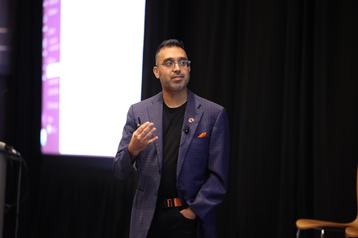
“With our universal data intelligence, we're largely focused around helping people leverage [and] adopt AI in a secure, governed way and a cost-efficient way, with the ability to scale,” Prakash Darji, GM of Everpure’s digital experience business unit, said in a press briefing. “That starts with knowing where your data is at, understanding it, prepping it for use, and building for feature scaling lessons.”
Coopetition and consolidation
Speaking with SDxCentral ahead of the product unveiling, Darji drew a direct comparison between API management in terms of where data intelligence is heading, with it billed as the data‑era equivalent of an API gateway.
“We're moving away from role-based access controls in apps to attribute-based access controls and data, you need some way, some middleware of doing that,” he said.
But where API catalogs snowballed into a full governance category, pulling in metering, quality-of-service controls, and access management until players like MuleSoft and Boomi emerged to dominate the space, Darji sees data intelligence as more of a neutral coordination and control layer. Evepure’s announcement went one step further, describing its data primacy model as “liberating” information from individual applications to form a shared and governed system of record.
The offering’s automated governance features see the platform scan systems to identify potentially sensitive information, and track related lineages to ensure. An added differentiator highlighted by the exec, meanwhile, was model context protocol (MCP) support, which he characterized as a natural language means to better understand where data lives, and ensuring safety rules governing which agents or applications are allowed to touch it, and ultimately mapping the raw data to business definitions via a semantics knowledge graph.
When framing Data Intelligence against the wider market, Dariji was openly skeptical of the current AI data landscape, contending that vendors like Databricks, SAP, and Salesforce were among those making the same pitch of bringing data into their specific ecosystems.
“I just don't buy that all data will be controlled in one platform, and I don't buy that you copy everything everywhere as well,” Darji said. “I don't buy those arguments that are happening in vendor self-serving wings.”
Everpure instead positions Data Intelligence as a heterogeneous offering, working across wherever data already lives. And while the launch drew comparisons to Databricks Unity Catalog or Snowflake Horizon, the exec noted that Databricks itself is treated as just another source for the platform, in addition to the pair already working together on an Apache Iceberg open table sharing collaboration.
“Are we going to live in a world of coopetition where people are trying to pull to their center of gravity? Sure. Our view is you should own your semantics, you should own your data as a customer, and shouldn't be held hostage by your vendors on this, because I think that's going to lead to a better outcome,” Darji added.
Context as the moat
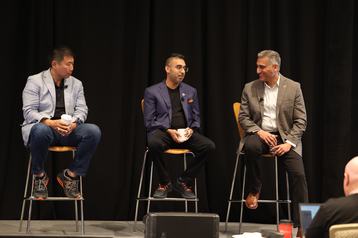
Data Intelligence leans heavily on the vendor’s 1Touch acquisition. The startup’s former CEO turned GM for data management at Everpure, Ashish Gupta said 1Touch brings the “contextual layer” Pure lacked – context, he argued, being the core competitive moat.
“We do discovery more than anybody else in the marketplace,” Gupta said, talking with SDxCentral, drawing a contrast with DSPM (data security posture management) tools that only cover cloud environments.
What 1Touch adds, in his telling, is inference-based classification that builds an understanding of how data is actually being used across business processes. That depth, he said, is what makes the offering relevant beyond security and compliance use cases, to essentially offer behavioral telemetry to power AI applications.
But he also echoed Darji with regard to coverage breadth, contrasting Data Intelligence with h Microsoft’s classification tooling which he viewed as being limited to its own estate and BigID’s heavier, in‑process approach.
“The whole idea of data management, and the idea that storage is super important, application management was very important, workflows were important, but now data management allows us to bring all of this together, which is a pretty large adjacency that is going to be enabled on top of a fantastic revenue stream and great NPS (net promoter score) score,” Gupta added.
Storage, and...
In addition to the launch, Everpure executives were also keen to stress that despite its newfound focus on data intelligence and governance, the company has no plans to walk away from its traditional storage base.
In response to an SDxCentral question on the subject, Rob Lee, Everpure’s chief technology and growth officer, likened the shift to “storage, and.”
“Storage has never been sexier, but it's because of what people are doing with the storage, and that really comes to the data,” Lee said. “This whole effort, the rebrand, renaming of the company, [and] the charting the new direction to focus deeper into data intelligence, data governance, classification, understanding … has been a concerted effort over the last 18 months. It just so happened to be fortuitously timed with the 1Touch acquisition fit right into that timeline.

“This has been a concerted, intentional journey to expand from our storage infrastructure roots into an area of data management, data intelligence for our customers. And while storage in the name helped us get to where we are, it was starting to hold us back from the broader side of discussions.”
Darji went one step further, speculating that the semantic knowledge graph could eventually solve a more fundamental AI infrastructure problem.
Pointing to the growing cost and accuracy issues caused by bloated context windows, he suggested that if ontologies and knowledge graphs could persist parsed information closer to underlying data, they could effectively serve as persistent memory for agentic AI, potentially solving the context window problem the way flash storage once solved memory constraints.
“It's possible it goes that way, but I'm not promising that now,” Darji concluded.







Comments