

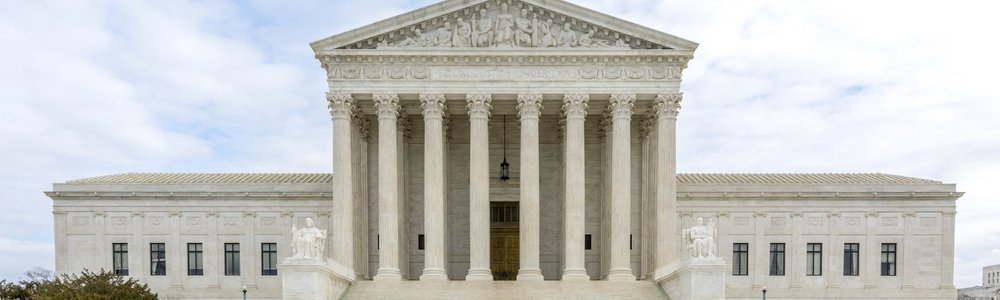
Cisco’s efforts to quash a lawsuit that alleges the networking giant’s tech was used to persecute Falun Gong religious believers in China will be heard before the U.S. Supreme Court.
The Supreme Court will now review an appeals court decision allowing lawsuits against Cisco to proceed.
The case, Cisco Systems, Inc. v. Doe I, stems from accusations that Cisco allegedly sought to market its technologies for use in China's Golden Shield nationwide network of surveillance assets.
An Associated Press (AP) report published last October claimed leaked Cisco marketing materials dated 2008 allegedly touted its products' ability to identify more than 90% of online content related to Falun Gong, a religious dissident movement banned in China for its anti-Communist Party stance. The same report alleges Cisco adopted the language of the country's communist party, even quoting an official who referred to the group as an “evil cult.”
Falun Gong followers alleged to have been victims of human rights abuses by the Chinese Communist Party have since sought to sue Cisco and two of its executives, arguing vendor's tech effectively enabled the Chinese government to find and subsequently interrogate the religious movement's practitioners.
The case hinges on two key doctrines. The first is the Alien Tort Statute (ATS), which grants non-U.S. citizens the ability to file lawsuits in federal court for international law violations, even if those violations occurred outside the U.S. The second is the Torture Victim Protection Act (TVPA), which permits torture victims to sue perpetrators in American civil courts, irrespective of where the acts took place, provided the individuals were acting under the authority of a foreign nation.
The case found itself before the Ninth Circuit, where in 2023, a divided panel ruled that while individual executives couldn't be sued under the ATS, Cisco as a corporation could face aiding-and-abetting claims. The court ruled, however, that those same executives could be personally liable under the separate TVPA statute for the same conduct.

Chinese engineers who helped design Salt Typhoon attacks were former Cisco Academy trainees
Former Networking Academy trainees identified as perpetrators in global cybersecurity espionage campaign
Cisco argues that federal courts should not be permitted to create “aiding and abetting” liability under either statute without explicit congressional authorization.
In its petition to the Supreme Court, the company contended that it merely sold standard networking equipment to Chinese government agencies in lawful commerce – sales that were deemed permissible under U.S. law at the time.
Cisco also argued that allowing the lawsuits to proceed would require a U.S. court to determine whether the Chinese government violated international law in its treatment of its own citizens on Chinese soil, a determination it argues belongs to the political branches, not the judiciary.
The company further argues that such judicial overreach contradicts the Supreme Court's 1994 Central Bank ruling, which established that courts cannot imply aiding-and-abetting liability from statutory silence.
By allowing the Ninth Circuit ruling to stand, Cisco argued that it would “open the floodgates” for lawsuits against U.S. corporations for the legal export of off-the-shelf goods and services.
In October 2025, Congressman John Moolenaar (R-Michigan) and Chris Smith (R-New Jersey) called for Cisco’s petition to be denied, arguing its review was “necessary now because the case harms American foreign policy [and] gets things entirely backwards.”
“Cisco’s suggestion that Congress authorized the sale of the technology is false,” the pair wrote in a letter to U.S. Solicitor General D. John Sauer. “It is absurd to think that Congress would have supported the sale of a tool custom-designed to advance religious persecution.”
Arguments before the Supreme Court will be heard sometime in the spring, with a decision potentially being published “by late June or early July,” according to SCOTUSblog.



Comments