

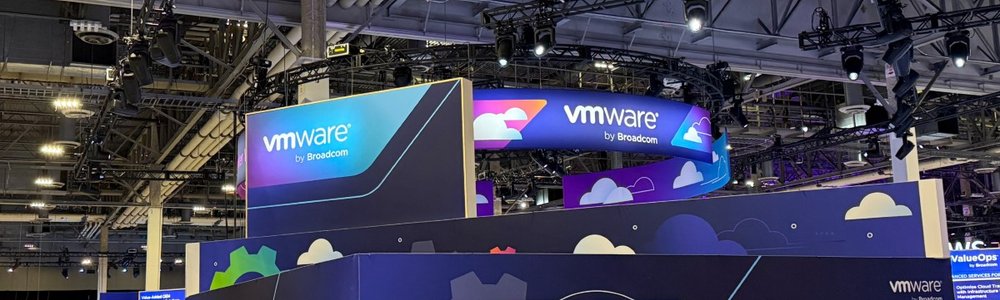
Broadcom has shown considerable integration and financial progress through its nearly two-year ownership of VMware, momentum that coming out of the vendor’s most recent Explore event could continue to build in specific areas and be challenged in others.
Broadcom CEO Hock Tan highlighted VMware's progress during the vendor’s most recent earnings call in touting more than 90% of VMware’s 10,000 largest customers have signed up for the vendor’s halo Cloud Foundation (VCF) platform and accompanying subscription licensing plan since those controversial changes were put in place shortly after the acquisition closed in late 2023.
Tan told investors that “pretty much, virtually way over 90% have bought VCF,” which was a subtle increase over the 87% Tan said were converted during Broadcom’s previous earnings call.
However, many continue to question VMware’s long-term loyalty efforts. Gartner just recently stated VMware will lose 35% of its workloads by 2028.
Despite churn forecasts, some analysts note VMware has built up a considerable base of loyal users, which could insulate the vendor from drastic upheaval.
Sid Nag, president and chief research officer at industry advisory firm Tekonyx, explained that VMware has a deep history within major IT departments, and that level of audience familiarity should not be underestimated as Broadcom continues to integrate VMware.
“These guys know VMware,” Nag said of that IT audience. “You can't just go into an IT department and say, ‘oh, guess what? We're going to go with a different virtualization technology because VMware is charging us, blah, blah, blah,’ because the amount of money you have to spend to train your new people, I mean, get real, right? I think that's a position that VMware is in, and I think they have to continue to monetize that and use that as a bully pulpit.”
That notion was echoed by Forrester Research, which, in a recent report headed by principal analyst Naveen Chhabra, noted that embedded loyalty.
“VMware love runs deep among the sysadmins who built their career around these products, and the proposed ‘all-in’ model only increases their remit in the organization,” the report stated. “If you opt out, they might opt in at a company that also opted in.”
Partners are key
VMware during the Explore event featured those embedded relationships, with company executives repeatedly calling out to the support of those long-time IT relationships. This included partner panels that highlighted established work on deepening support for those IT teams.
Despite the event efforts, VMware is reportedly still working through some of the details for its go-to-market partner strategy.
The Forrester Research report noted some VMware clients have complained about delayed responses when seeking clarity on new licensing terms and conditions, only garnering answers when they were close to a renewal date.
“Is this due to limited resources at a newly slimmed organization?” the Forrester report questioned. “Or is it a sales tactic to give clients no other option but to renew with short timelines?”
Tan did somewhat acknowledge that challenge during the vendor’s most recent earnings call when touting VMware’s conversion of its largest customers to the new pricing and licensing structure.
“I'm careful about [my] choice of words,” Tan said. “Because we have sold them on it, and they bought licenses to deploy, doesn't mean they are fully deployed.”
Tan explained that this deployment phase will be “the hard work over the next two years that we see happening,” but that’s the part where customers will be able to garner value from those deployments. It will also allow Broadcom to then sell more advanced services into those deployments.
“First phase is convincing people to convert from perpetual subscriptions [to] purchasing VCF,” Tan said. “Second phase is make that purchase they made on VCF create the value they look for in private cloud, on their premise, on their IT data center. That's what's happening and that will sustain for quite a while, because on top of that, we will start selling advanced services, security, disaster recovery, even AI running AI workloads. All that is very exciting.”
That AI angle could prove a deep well of opportunity for VMware.
Nag said that if VMware “can strike a good balance of taking the existing orchestration tools and embedding AI in it, and then still continue to appeal to their users in the IT department, … I mean the IT folks, then I think that's the way to go.”
Private cloud opportunities
Broadcom has been nothing if not a big proponent of private cloud. The vendor views VMware as key for enterprises to unlock the full value of their data.
However, Nag warned that VMware will need to be careful in how fully it embraces Broadcom’s private cloud mantra, and specifically how much it relies on Broadcom’s repatriation focus.
“I think that's a dangerous slippery slope for them to go down,” Nag said of what he called the “r word.”
“Workloads aren’t moving back,” Nag explained. “There are new workloads that were never created or moved to the public cloud, that belong in the private cloud. I think those will remain and continue to blossom in the private cloud environment, especially with things like sovereign cloud capabilities” or others that have “walled garden, guardrail requirements.”
“I think if they can address that market, the question is: how large is that market, and more importantly, what are the pathways they want to build into the public estate?” Nag said of that direction. “If indeed what they're saying about cloud being an operating model, these things should all blend together and should work seamlessly, and VMware should be working toward that goal for their customers.”
Nag also noted VMware should further investigate using its platform to tap into small language models (SLMs) in support of agentic AI deployments. These SLMs can be structured into easier-to-manage databases running in a localized or edge environment, which could support a more compelling financial model.
“They're smaller in size, and since they are industry specific, they require that running in a guardrail environment where security, privacy, and other things start to matter even more, and those things can run on a private cloud," Nag explained. “What is VMware’s story around supporting these industry specific, domain specific, small language models? I think they could have built a great story around that. The target customer for that is not necessarily the small-and medium-sized enterprises, it could be larger enterprises.”
A recent Gartner report predicted more than 40% of agentic AI projects will be canceled by the end of 2027 due to cost uncertainty.
“Most agentic AI projects right now are early-stage experiments or proof of concepts that are mostly driven by hype and are often misapplied,” Anushree Verma, senior director analyst at Gartner, explained. “This can blind organizations to the real cost and complexity of deploying AI agents at scale, stalling projects from moving into production. They need to cut through the hype to make careful, strategic decisions about where and how they apply this emerging technology.”
Will conversions continue?
That cost uncertainty could also alter Broadcom’s efforts in converting legacy VMware customers further down the financial spectrum. While Broadcom has focused its initial conversion efforts on VMware’s largest customers, Tan told investors during the latest earnings call that it has started to see cautious activity from smaller VMware customers.
“Beyond the largest 10,000, are we seeing a lot of success? We are seeing some,” Tan said, adding that Broadcom sees two reasons why it does not expect as much success with that next tranche.
“One is the value, the TCO [total cost of ownership] as they call it, that comes from [VCF] will be much less, but more importantly is the skill sets that’s needed to not just deploy – that they can get, services and ourselves that can help them – but to keep operating might not be something that they can take on,” Tan explained. “This is an area we’re still learning and be interesting to see.”
Tan added that “while VMware has 300,000 customers, we see the top 10,000 as being people where it makes a lot of sense, derive a lot of value in deploying private cloud using VCF. We now are looking at whether the next 20, 30,000 mid-sized companies see the same way. Stay tuned. I'll let you know.”
More in The Cloud & Storage Channel
-

-

-

Episode Is data AI’s biggest bottleneck?
Comments