


AT&T CEO John Stankey is not letting the revolving executive door at rivals T-Mobile US and Verizon sidetrack the carrier’s execution focus, which includes the quick insertion of its newly acquired – and admittedly high-priced – spectrum assets into its 5G-based fixed-wireless access (FWA) business to bolster what is becoming a more integral part of the carrier’s broadband focus.
Stankey deftly fielded a question during the carrier’s third-quarter earnings call on succession plans in light of recent moves by rivals T-Mobile US and Verizon, or what impact those changes might have on the broader competitive environment.
Stankey downplayed any competitive concerns from the changes, noting that the telecom market has always been hotly contested. More pointedly, Stankey also refrained from speaking about potential AT&T leadership succession plans.
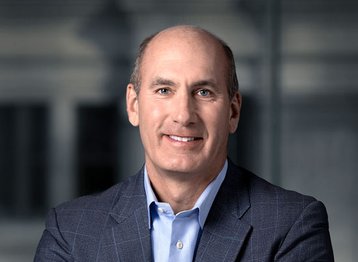
“We're focused on what we need to do to operate our business every day right now,” Stankey said on that question. “We don't have those distractions that others have, and I know what I'm entirely focused on, which is making sure that the management team understands their priorities and executes … and that's all we're worried about. We're not worried about your question.”
T-Mobile US’ move will see COO Srini Gopalan replace long-time CEO Mike Sievert beginning November 1, while Verizon’s more sudden change saw long-time CEO Hans Vestberg earlier this month abruptly replaced by board member and former PayPal CEO Dan Schulman.
AT&T’s already tapping EchoStar mid-band spectrum
While curt on those moves, Stankey was loquacious in touting AT&T’s fiber focus.
The executive said the carrier has started to deploy some of the mid-band spectrum it acquired from EchoStar as part of a $23 billion deal announced in late August. Stankey noted that the deployment of that 3.45 GHz spectrum was under a “short-term management lease,” and that the carrier expects to have parts of that spectrum deployed to “cell sites covering nearly two-thirds of the U.S. population by mid-November.”
That EchoStar deal included 30-megahertz of nationwide 3.45 GHz mid-band spectrum and approximately 20-megahertz of nationwide 600 MHz low-band spectrum in an all-cash transaction. Stankey noted during a call shortly after that deal was announced that it expected a quick turnaround on deploying the mid-band spectrum with most of that geared toward bolstering its 5G network capacity in support of its Internet Air fixed-wireless access (FWA) services.
“This should position us to further expand the availability of Internet Air in our sales channels in 2026,” Stankey said during the Q3 call.
Some analysts noted that the price AT&T paid for that spectrum was a multibillion-dollar premium over the perceived value of that spectrum, a notion Stankey said was basically the price of doing business.
“I'm well aware that what we're paying is more than what Dish paid for spectrum at auction, but that's not a new and startling fact,” Stankey said during a conference call following the deal’s unveiling. “There's speculators who go in and buy spectrum all the time and hold it for a number of years and then ultimately come back in and sell it for more than what they bought it for, and that's the nature of auctions and what occurs.”
AT&T added 270,000 net Internet Air customers during the latest quarter, pushing that service’s total customer base to more than 1.25 million. That growth nearly matched the 288,000 fixed broadband customers AT&T added during the most recent quarter, which is a ratio Stankey said the carrier will continue to monitor.
The executive maintained AT&T’s long-standing position that fiber-based broadband remains the most economical delivery method, a model AT&T is bolstering through its pending $5.75 billion acquisition of Lumen Technologies’ consumer fiber business, various fiber partnerships, and its own organic expansion to reach 60 million households by the end of 2030. That position includes subtle intimidation of rivals.
“We try to be very deliberate about ensuring that everybody knows when the train rolls into town, that the train’s in town and it's probably not a good place for anybody else to come and deploy their capital, because this is a company that has a track record of going in and penetrating aggressively and being successful in markets, and there's probably easier places for people to go than come up against us,” Stankey said about AT&T’s fiber expansion model during the earnings call.
Stankey later seemingly mocked rivals that might not heed that advice.
“We also know that when somebody over builds a small portion of the metropolitan area, this is a scale business, having 230,000 homes passed isn't going to cut it,” Stankey said of new entrants into the fiber space. “When we come in and we're able to use our brand, use our marketing position, we can do very, very well. There's small amounts of overlap and we still get the share we need to drive the returns into our business.”
AT&T rivals Verizon and T-Mobile US have both recently expanded their fiber plans, though their deployment plans remain smaller than AT&T’s multi-year agenda. However, those two rivals are years ahead of AT&T in penetrating the 5G-based FWA broadband market, a position that Stankey said AT&T plans to steadily eat into, but not at the expense of its high-fiber focus.
AT&T’s fiber, 5G FWA balance
Stankey referenced AT&T’s analyst day last year when the carrier provided a map of metropolitan areas where it sells broadband services.
“You will see that there isn't Internet Air subscribers sitting in the fiber footprint, and there really shouldn't be. There not only shouldn't be any of our Internet Air subscribers in the fiber footprint, but there shouldn't be anybody else's Internet Air subscribers in our fiber footprint,” Stankey said. “My intent is to ultimately market and sell and structure the product in a way that we make sure that that is, in fact, the case, because there is no lower marginal cost way to deliver broad dam than fiber, and once it's in, it's in, and it should basically have a preferred run at the market.
AT&T is currently offering its Internet Air product in parts of 47 states, with – as Stankey noted – an initial focus in markets where the carrier does not have a fiber footprint. Despite not being enamored with 5G-based broadband’s financial structure, Stankey sees areas where it can go after the market.
This includes the enterprise space, where Stankey noted usage trends are lighter than in the consumer space.
“I think our mix of business can be a little bit stronger moving forward, and I think it will hinge on how effectively we ramp in third-party channels to make that happen,” Stankey said of that opportunity.
AT&T is also leaning heavily on its Internet Air product to replace its legacy copper infrastructure, which continues to show dwindling customer interest.
“We don't want that equipment on our network anymore,” Stankey starkly stated. “We don't want it sucking down power. We don't want to be maintaining copper.”



Comments