


AT&T CEO John Stankey remains bullish on AI-related technology but told an audience at an industry event this week that recent advances being made by AI labs have elevated cybersecurity concerns to the point where “everybody’s more vulnerable.”
Stankey during this week’s Semafor’s Silicon Valley & The World event said that AI has brought “incredible gains and there’s huge promise in the technology,” but that those gains and future promise come with risks.
“By no means am I a doomer or believe in the exclusive downside of things, but we are in a new era right now, and I think it's very hard for anybody who's doing the innovation and working all day long in a lab, doing what they're doing, to actually know 100% what the net effect is when something gets out in the world and actually gets applied in companies like mine or others,” Stankey said. “And I do a fair amount of work with other critical infrastructure leaders that are out there, and I know anxiety levels are pretty high right now.”
Stankey explained that the technology industry had for years worked toward a stable and secure IP architecture that allowed for a minimal amount of risk, but that recent AI-fueled advances have driven that risk “up an order of magnitude.”
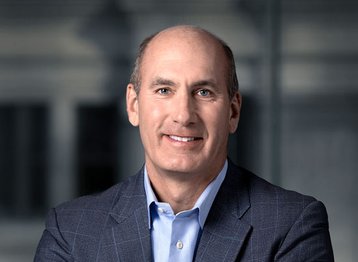
“And it's not that it can't be managed back down,” Stankey continued. “It's just that we've got to manage it back down, and it's going to take some time given what we now know. And I think we need to understand that while those that are developing products need to maybe have a little bit more coherent coordination with those out in the practicing world so that we're communicating effectively with each other, and we understand how to triage these risks.”
That anxiety runs through the connectivity infrastructure layer itself, with Stankey stating that, “fundamentally, at this moment in time, I think everybody's more vulnerable. I don't know that that's breaking news.”
“Now, do I believe the technology can be applied to make them safer? Yes, but that's that point of it's going to take us 18 to 24 months to figure out how to turn the technology into advantage rather than a liability,” Stankey continued. “That's a whole new set of practices, a whole new set of coordination that has to go on, and it will happen, and we'll be able to move faster. We'll be more agile. We'll have better ways of defending things. But you've got to build that muscle in order to employ the technology.”
Stankey’s comments come under the shadow of several technical calamities that have struck U.S. technology infrastructure, outages that have been blamed on technical issues and not cybersecurity attacks.
Open-source software concerns
Stankey during the interview also repeatedly cited open-source code as one area of vulnerability concern.
“I don't think anybody in any industry can go out and say that they're confident that they know every open-source piece of code where it sits in their operation right now, and if you accept that, then that means probably all of us have some degree of vulnerability,” Stankey said.
This topic was a main point of conversation at the recent KubeCon+CloudNativeCon event in Salt Lake City, where open-source industry leaders admitted to the current challenge in security open-source software.
Despite Stankey’s open-source angled concern, he did tout the benefits of having access to optionality such efforts provide.
“If you're a buyer of technology, what do you try to do? Avoid lock-in. And everything you do with your commercial arrangements are about trying to balance and manage that,” Stankey said. “And we're in another one of those moments. What are we trying to do as we think about buying capabilities? You want to avoid lock-in. You want to keep optionality open, and you want to protect what is yours and what is your … as many refer to, your alpha, your information, your IP so that it isn't subjected to being used at will broadly in the economy.”
AT&T is indeed very reliant on such efforts, including its open radio access network (RAN)-based $14 billion network overhaul program.




Comments