


Count AT&T CEO John Stankey among those discounting SpaceX’s recent spectrum-infused Starlink Mobile ambitions, noting that having spectrum is a lot different than operating a mobile telecom network.
Stankey during the carrier’s third-quarter (Q3) earnings call did not specifically mention SpaceX or Starlink during prepared remarks, but SpaceX’s recent purchase of new spectrum assets were top of mind for financial analysts on the call. That deal has SpaceX purchasing up to 14-megahertz of low-band (800 MHz) spectrum from Grain Management for a reported $8 billion.
“I wouldn't over rotate on what I would call one carrier of low-band spectrum,” Stankey said on the size of that spectrum acquisition. “Let's put this in perspective: In our scaled network, we run, depending on the metro, somewhere between six to eight carriers of low-band spectrum.”
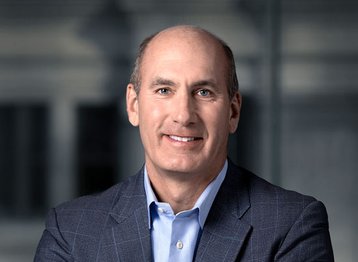
Stankey also noted that its operations runs those carriers – or specific spectrum-fueled transport channels – on all of its antenna sites, including “every indoor building system and high rises and hospitals and stadiums.”
“So I think it takes a lot of years and a huge level investment to get to the kind of performance levels that customers have become accustomed to in scale networks that are running on the infrastructure that most of the incumbent providers have today,” Stankey added.
That comment was pointed at SpaceX’s current dearth of terrestrial infrastructure and its announced unorthodox plans to counter that dearth using its largely externally deployed Starlink broadband antennas.
AT&T and its direct telecom rivals T-Mobile US and Verizon recently signed the dotted line on a satellite-focused spectrum-pooling joint venture and named a long-time industry executive to at least temporarily head that effort. Those carrier executives have repeatedly maintained their suspicion of SpaceX’s telecom ambitions.
While downplaying broader competitive concerns, Stankey during the earnings call did note that the industry’s fixed-wireless access (FWA) business could be impacted by a denser satellite-based broadband offering.
“I think LEO constellations are fantastic for delivering bandwidth to rural areas and they may well be the most efficient and effective way to get bandwidth in the less densely populated areas moving forward,” Stankey said, later adding, “there's going to probably be some kind of a peak and then a downward trajectory of fixed wireless as those technologies and the better technologies settle into places.”
AT&T itself did add a company record 327,000 FWA connections during the quarter, though its enterprise-based FWA gains stumbled to their lowest point of the year.
Despite Stankey’s broader argument vis-à-vis satellite-based competition, AT&T’s stock sunk on its latest earnings release, furthering what has been a bumpy downward ride following SpaceX’s spectrum announcement earlier this month.
Fiber footing
Looking below ground, Stankey did note the carrier was making progress in connecting new users through its recently acquired Lumen fiber business. Those markets had been under penetrated compared to AT&T’s legacy fiber operations, with Stankey explaining broader market share goals.
“What I've shared with you before is we have a pretty straightforward process that gets us from zero to 40 [percent market share] in terms of tactics and timing. The 40 to 50 range is a little bit different. Takes a little bit more time. Takes a variety of different tactics, and it comes with persistence and consistency. And frankly, it will lean a lot on us being very successful on more converged customers to get there, and so still fully believe that's achievable,” Stankey said, adding that share could come from having partners on its network.
“Obviously, in all markets, I'd love to be able to get to that 50% penetration with a direct retail relationship, but I've also shared with you that in this company and in this industry, it is not beyond any expectation that you wouldn't have some wholesale at some point in time, and we got a lot of capacity on that network. We could literally handle 100% of the customers in an area if they all came to us,” Stankey said. “So I want to make sure that we're putting all that capacity to use over the long haul. And if we hit a place in particular markets, for example, where we think we've reached our ability to penetrate under our brand, as this matures over time, is it possible that we might open up the network and have others sell on top of it to drive penetration and returns up? I wouldn't rule that out over the long haul.”
AT&T remains on track to reach 60 million locations passed with its current fiber network build and expansion plans, though Stankey did add that he would be willing to further acquire assets should they fit the carrier’s model.
“If the infrastructure's been built in a way that's consistent with our standards and our practices, that we can operate it effectively over the long haul, and the price is right, sure, I'd be interested in picking up more footprint if it holds my point of view of us getting scale in the right geography,” Stankey said. “I don't want to just buy footprint for the sake of buying it. I need to make sure that it bridges to other parts of our network where we can have the kind of efficiencies and scale in advertising and the growth in our wireless business and all the things that we think kind of are the magic and the economics around that.”




Comments