


Cisco has prevailed in a years-long legal battle with Egenera after a federal appeals court affirmed that the networking giant did not infringe on patents related to network virtualization.
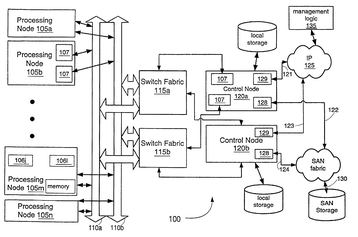
Cloud services provider Egenera sued Cisco, alleging patent infringement of a digitalized processing platform “from which virtual systems may be deployed through configuration commands.”
The firm claimed that Cisco’s Unified Computing System (UCS) offering – which virtualizes server management without the use of physical cables – infringed on its patent and demanded at least $371 million in damages.
The Massachusetts district court ruled for Cisco in a series of decisions, beginning with summary judgment on two of the four asserted claims, then presiding over a jury trial in which the remaining claims were also found not to be infringed.
In the latest chapter of the long-running case, the US Court of Appeals for the Federal Circuit again sided with Cisco, affirming all of the lower court’s rulings.
The appeals court found Egenera “fails to cite any actual evidence the district court overlooked that somehow shows the processors in Cisco’s accused UCS system function like any disclosed embodiments in the patent itself.”
“A reasonable jury, viewing the evidence in the light most favorable to Egenera, could find only that the UCS CPUs have knowledge of, and use, Ethernet functionality, but do not – as the claims require – actually ‘emulate’ Ethernet functionality,” the ruling reads.
A long-running dispute nears an end
The patent infringement dispute dates back to 2016, when Egenera sued Cisco, alleging that the UCS platform infringed its patent for a digital processing platform capable of deploying virtual systems via software commands.
The offering combines compute, networking, storage, and virtualization into a unified system, leveraging a single Ethernet-based “unified fabric” that runs Ethernet and Fibre Channel traffic over converged network adapters controlled through a software system.
The core of Egenera’s claim centered on UCS’s virtualization technology, specifically, its converged fabric and virtual interface capabilities, which enable multiple virtual NICs (vNICs) and virtual HBAs (vHBAs) to run over a single physical link via Cisco’s VN-Link and VM‑FEX architecture.
The legal battle saw Cisco successfully challenge multiple aspects of Egenera’s case early on. One of the asserted patents was invalidated in 2017, and two others were later quashed.
Egenera then revised the inventorship on its remaining patent after acknowledging that a now-retired engineer had been erroneously listed as an inventor – a change that triggered judicial estoppel and complicated the litigation.
Cisco went on to secure several summary judgment rulings that narrowed the scope of the case and eliminated Egenera’s efforts to claim over $440 million in pre-suit damages.
While a 2022 jury verdict found no infringement, it also declined to invalidate the last remaining patent. Egenera sought a new trial, arguing that Cisco had introduced improper expert testimony and that jury instructions were flawed.
But the Federal Circuit rejected those arguments, finding that any alleged errors had been waived at trial or were not serious enough to have prejudiced the outcome.
“Egenera waived its challenge to purportedly improper testimony and, regardless, had not shown it was prejudiced by the testimony,” the court wrote.





Comments