


The recent frenzy around satellite-based communications has drawn out my inner-most curmudgeon, something that as a “technology” journalist I am not proud of, but I think I do have some legitimate reasons for this latest curmudgeon fit.

You see, I was listening in on the recent SpaceX earnings call – as any acknowledging masochist might – when the conversation stumbled into the Starlink Mobile territory. Starlink Mobile, for those out of the loop, is SpaceX’s long-gestating plan to enter the traditional mobile telecommunications space using a non-traditional satellite-forward transmission architecture.
SpaceX lead Elon Musk has teased this effort for some time, backed by the success of Starlink’s satellite-based fixed-broadband service and its direct-to-device (D2D) text messaging service. Both of these have indeed shown the viability of satellites to support compelling use cases.
But, the real Starlink Mobile venture is looking to take that the next step by supporting true mobile device connectivity. And why not? Mobile telecom is a trillion-dollar industry, and what already super-rich person wouldn’t want to get even more rich?
And this is where I go back to the SpaceX earnings call, where presumably very smart people were saying things that set my curmudgeon hackles alight.
COO Gwynne Shotwell touted SpaceX was sitting on approximately 65-megahertz of spectrum it recently acquired for more than $10 billion from EchoStar that provides Starlink with a “massive increase in capability.” Musk later noted that this spectrum could be used for the ground component of a Starlink Mobile service.
Fair enough, though most telecom operators today have networks backed by hundreds of megahertz of spectrum, an amount needed to provide multigigabit speeds.
More hackle raising was Shotwell’s notion that the Starlink Mobile service could utilize a small cell-based deployment structure backed by the tens-of-thousands of already consumer-deployed Starlink Broadband antennas. These are those rectangular dishes sitting on rooftops that link to Starlink’s more than 10,000 orbiting satellites.
Musk furthered this notion, stating the firm feels “reasonably confident that we can deploy a large number of sort of small stations, essentially, that they're really just Starlink dishes that also provide connectivity in the mobile spectrum bands and have them be all over the place.”
Musk added that these already deployed Starlink broadband antennas “are located on the roofs of houses and businesses, so … they've got a sort of a clear view to for providing connectivity directly to the cell phones on the ground, and in fact providing connectivity that is, we think, probably better and higher bandwidth than what is currently available from cellular providers.”
Financial analysts on the call attempted to gain clarity on this model with questions based in reality and physics, questions that the SpaceX executives simply swatted away as being “immature.”
But that didn’t stop a phalanx of long-time industry analysts to also question this model. This included any number of analyst firms that have also expressed similar side-eyed sentiment on Starlink’s as-stated mobile ambitions.
The basic counterargument to this Starlink Mobile plan is that it does not yet have control of enough wireless spectrum to provide enough capacity to support any significant number of customers nor the beaming infrastructure to support a densified coverage map.
I may need a math tutor
This boils down to physics being hard to beat. It’s not that a small cell-forward deployment model can’t work. It’s just that the physical requirements of such a deployment are challenging at best and there is a long and sad history of such plans being slapped in the face by reality.
You need a lot of spectrum to support a lot of people using a lot of high-draw services, and you need a solid foundation of antennas in the right places and with the right connectivity to beam/receive signals to and from a large number of rapidly moving, resource constrained devices.
(That last part might sound easy, but have you ever been to a city council meeting?)
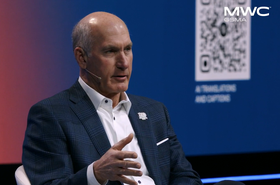
Don’t believe me? Just listen to budding satellite-focused physics professor and sometime Verizon CEO Dan Schulman.
Now, I also acknowledge that just because something seems impossible today doesn’t mean it won’t be possible tomorrow.
- Man on the moon!?! Who would have thought!
- Flying cars!?! Uh?
- A woman president!?! Yikes!
I also acknowledge that a lot of money and a lot of smart people can bridge a lot of technology gaps.
And don’t get me wrong, I want that gap bridged because I want more mobile telecom operators.
I pine for the days of SBC, NYNEX, Cingular, Nextel, PowerTel, Dobson, Triton PCS, Price Communications, Leap Wireless, Tritel PCS, Bell Atlantic, Southwestern Bell, Pacific Bell, BellSouth (so many Bells!), US West, Ameritech, Alltel, Western Wireless, US Cellular, Telecorp PCS, Sprint and all of its affiliates.
(Basically, I somehow enjoy mobile telecom operator crowds but hate being around too many actual people.)
More competition is always much more fun than less.
But if SpaceX is really serious about these mobile aspirations, there are some more realistic ways to go about it.
If I remember correctly, there was a somewhat assembled 5G-ready network sitting mostly unused by EchoStar/Dish/Boost/whatever that could have been acquired for what I am guessing would have been cents-on-the-dollar. I am even pretty sure there was a mutual friend to those two parties in a high government role who would have been more than willing to make a (cough, cough) introduction.
Adult pants on the campaign trail
But, if we are all being adults here, I think we can agree that SpaceX’s current Starlink Mobile push and its earnings call commentary is really about putting pressure on already established operators to open up their terrestrial networks to some sort of operational joint venture.
This question has been put to every telecom executive over the past several months, with nearly all steadfast in their opposition to such a model. They have backed that steadfastness with their own satellite-focused ventures in an attempt to bolster their own position in space.
This resistance is understandable as while I may enjoy more telecom operators, those tasked with turning services into financial returns are not as open to more competitors, let alone with the market cache and cash of a SpaceX-based entity.
But, all it takes is just one executive to crack, and there are plenty of cable companies that have been half-in, half-out of the mobile telecom space that could see a Starlink Mobile joint venture as a can’t-lose proposition.
And that’s the point. It’s obvious and understandable that SpaceX wants a piece of that trillion-dollar mobile telecom pie, but it doesn’t want to really commit the money required to do it alone. Instead, it’s taken to the campaign trail in hopes of enticing someone to let it into the market on its terms.
The adult in me understands this rational, but the curmudgeon in me is already tired of this campaign. Wake me when this is all over.






Comments