

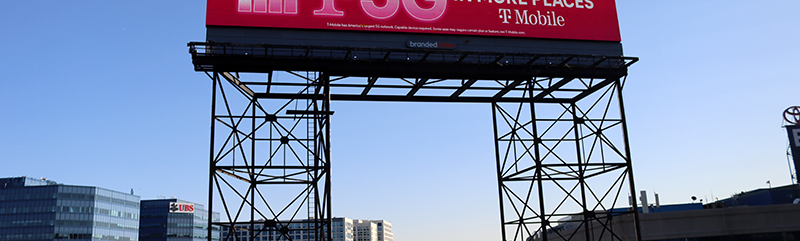
T-Mobile US signed a pair of new, five-year contracts with Ericsson and Nokia to supply 5G radio access network (RAN) equipment for its ongoing $40 billion network upgrade.
The multi-billion dollar deals cement the Swedish and Finnish vendors as the exclusive RAN suppliers for T-Mobile. Ericsson and Nokia have been T-Mobile’s RAN vendors for at least two decades.
The agreements also reaffirm that Nokia still has some friends in high places in the U.S. Unlike Verizon, which largely ended its business with Nokia and opted to go with Samsung for 5G RAN equipment in its place, T-Mobile remains confident in Nokia’s ability to meet its 5G objectives on cost and performance.
T-Mobile didn’t disclose the total amount it committed to spend with its two 5G RAN vendors for the next five years, but Verizon’s recent deal with Samsung totaled $6.64 billion and its RAN spending will be roughly split evenly between Ericsson and Samsung going forward.
T-Mobile was the first U.S. operator to deploy a “nationwide” 5G network and the first to activate a 5G standalone core anywhere in the world, with equipment and services from Cisco, Ericsson, and Nokia.
T-Mobile focuses on mid-band 5G in 2021
T-Mobile’s broad 5G network, which now covers 280 million people across 1.6 million square miles, is running on low-band spectrum. The operator claims it will have nationwide 5G coverage on the 2.5 GHz spectrum it acquired in the merger with Sprint by the end of this year.
Neville Ray, the carrier’s president of technology, recently said the company is upgrading 1,000 mid-band 5G sites per week and it expects to keep that pace through 2022.
T-Mobile said its continued work with Ericsson and Nokia will also allow it to add additional capabilities to its network like voice over 5G, network slicing, new radio carrier aggregation, and multi-user massive multiple-input multiple-output (MIMO).
Ericsson said it will supply RAN equipment, software, and services to the operator, including active and passive antennas for low-, mid-, and millimeter-wave (mmWave) spectrum.
Nokia specifically called out T-Mobile’s mid-band 5G network as an area of focus in its deal, but added that it will also supply the operator with macro and small cells for low-, mid-, and high-band deployments.
T-Mobile hasn’t shared plans for its much smaller 5G network running on mmWave spectrum, but Ray previously described it as something best reserved for the final stages of a 5G network deployment.


Comments