

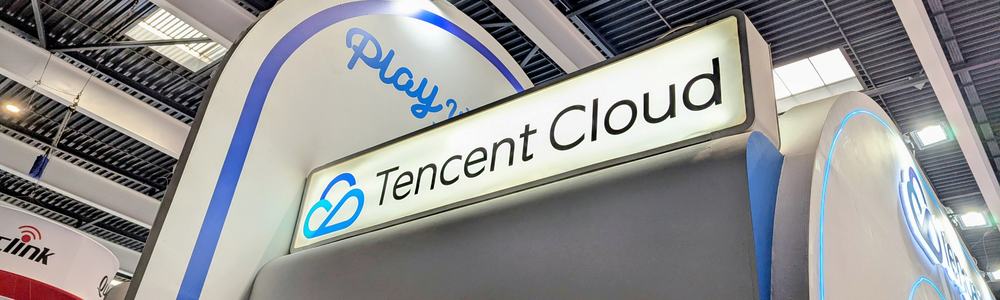
In a recent Forrester report on cloud sovereignty, the research powerhouse cited the usual hyperscale suspects as leaders in digital autonomy, flanked by European contenders such as SAP, OVHCloud, and T-Systems. What may have surprised some was the presence of Tencent Cloud in Forrester's leaders list, sitting alongside the likes of Google Cloud and Oracle.
The only Chinese hyperscaler in that particular segment, Tencent was lauded for maintaining a "consistently deliberate" sovereign cloud strategy, catering to the specific regulatory demands of its primary markets.
In an interview held at this year’s Mobile World Congress (MWC) event, Tencent Cloud Europe GM Fred Sun claimed that sovereignty was a "very important topic" for Tencent, with the company compliant with Germany's Cloud Computing Compliance Criteria Catalogue (C5) and the Europe-wide General Data Protection Regulation (GDPR), as audited by third parties such as the Cloud Infrastructure Service Providers in Europe (CISPE).
The firm also touts three availability zones in Frankfurt, with more than 200 content delivery network (CDN) nodes across major European countries.
"We place the highest importance on compliance in all the regions Tencent operates in," Sun said, adding the cloud market has diversified away from "monolithic public cloud" in pursuit of sovereignty.
The Sovereignty Supplement
Who really controls your data?
These efforts extend beyond Europe, with Tencent helping Indonesian telecom operators build their own sovereign cloud as the nation develops its digital infrastructure.
As explored in SDxCentral’s Sovereignty Supplement, telecom firms are taking the lead on building sovereign AI ventures to help nations keep control over their critical data and models amid rampant development from international AI developers. These projects are often built with the integration help of consulting giants like Accenture and AI factory wares from Nvidia, as opposed to said developers and hyperscalers like Tencent.
For Tencent, its main Indonesian partnership centers around public and hybrid cloud ventures from Telkomsel, as well as building AI tools for business-to-business and business-to-consumer (B2B/B2C) use cases with Tencent Cloud's Super App-as-a-Service (TCSAS), bolstering the mobile operator’s lead in national AI.
“We also have Indonesian customers who used to run their critical workload on hyperscaler data centers in other countries, and they're sort of repatriating that data to their own country,” Sun said.
Tencent’s footprint can be felt in other emerging markets, with the firm partnering last year with Orange Middle East and Africa to build and enhance its "Max It" super-app ecosystem across the region.
Sun said the service leverages TCSAS and a real-time chat solution to offer a “holistic experience” enabling users to chat, transfer funds, and engage within the app.

TCSAS also powers a reward-driven app from UAE operator E&, helping partner brands integrate services as mini apps within the main service.
Tencent is proud of these efforts, claiming to offer a simplified lifestyle experience for more than 160 million mobile customers across the Middle East and Africa (MEA). But Sun stressed TCSAS is also in use with European customers.
“It’s already being used by a number of enterprises as they explore new ways to bring services and partner ecosystems together on a single platform as part of their international growth,” Sun claimed. “They're leveraging super-app architectures to integrate commerce, payments, and content into a seamless customer experience.”
Tencent's Claw
Interestingly, the super-app service also integrates agentic AI.
Agentic aficionados may know Tencent was one of the first hyperscalers to offer agent orchestrator OpenClaw as a simple hosted-style offer. This was done via a one-click install tool in Tencent’s Lighthouse virtual private server (VPS) cloud platform aimed at developers, startups, and small businesses.
This kind of integration has yet to reach TCSAS, but Sun said Tencent’s aim remains to help businesses like telecom translate AI into practical, real-world impact, without sacrificing sovereignty and security. As recently explored by SDxCentral, European operators like BT seek closer involvement from hyperscalers when it comes to regulation so that compliant architectures are “baked in” rather than left for each operator to figure out alone.
Analysts from ABI Research tip the rise of the agent in telecom, forecasting the 5G radio access network (RAN) automation market will reach $6.6 billion by 2029, while open RAN automation will account for around 42% of that revenue by 2030.
“We are seeing a clear shift from AI as a tool for interaction to AI as a system for execution that builds, connects, and operates services," Sun said. "This is driving growing demand from developers and enterprises using frameworks like OpenClaw to build agents for real-world tasks."
The exec touted Tencent’s open architecture as supporting major telecom operators in Europe and globally, with high-performing systems that meet local data sovereignty requirements.
“We are moving beyond simple AI interactions to a model where AI builds and operates the services businesses need,” Sun added.

More in The Cloud & Storage Channel
-
-

-

Episode Is data AI’s biggest bottleneck?
Comments