

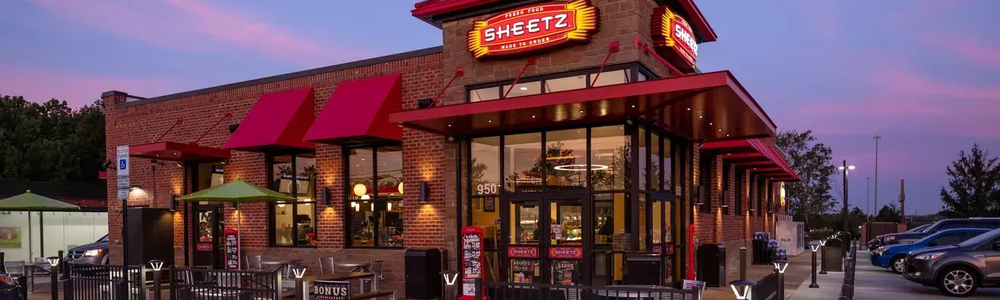
Pennsylvania-based convenience store chain Sheetz is in the process of replacing its VMware platform at more than 830 locations, a move that the retailer said was initiated due to ongoing cost concerns and is of growing concern to enterprises rapidly coming up on what analysts call a “critical inflection point” for their virtualized future.
Sheetz is migrating from VMware’s virtualization platform to StorMagic’s SvHCI hyperconverged infrastructure platform. This platform sits on top of an on-premises server and manages virtual machines (VMs) running on top of the offering.
The migration is being done remotely, with the new platform being run on an already installed pair of Dell Technologies R440/R450-series servers at each location. The retailer has already completed the migration process at more than 600 of its locations, with the complete migration expected to be completed over a four-month period.
Scott Robertson, infrastructure team manager at Sheetz, explained in an interview with SDxCentral that this deployment process was paramount to match with the retailer’s operation model.
“We are 24/7, 365 operation, so maintenance windows are at a premium, and we certainly didn't want to impact stores,” Robertson said of the process. “We just had to work with our operations department to set expectations that at this location, here's the order of events, and here's how the store is going to be impacted. We would take all of the systems down and slowly bring them up in kind of order of criticality. Like our credit loyalty processing, as soon as those hosts were back up online, that's the first to come on, and then we'll worry about the kitchen and the food later because we did most of them overnight, that three-to-five in the morning window where you're not impacting many customers at that point.”
Robertson also explained that Sheetz was able to “pause” plans for a hardware refresh as part of the StorMagic deployment, which aided the timeline and bottom line.
“We had a stack of what we’ll call refurbished gear that we typically would use for break-fix, and luckily we held on to a pile of that,” Robertson said. “So our decision was we're going to refurb this and go to third-party warranty for 10 to 12 months, and then revisit where the market's at, that way we're not making any unnecessary spend.”
Robertson added that the decision to go with StorMagic and the actual migration process was helped by Sheetz’s already established relationship with the vendor. This includes the previous deployment of StorMagic’s SvSAN as a hyperconverged storage layer in 2020, which was running with the retailer’s legacy VMware virtualization platform. The StorMagic software-defined virtual storage area network directly competes with virtualization offerings such as VMware vSAN.
That migration involved replacing multiple single-purpose systems with a two-node HCI architecture, which Robertson explained help reduced hardware complexity, accelerated deployments, and created a scalable platform to support business-critical services, including payment processing, loyalty programs, and store operations.
VMware cost concerns
Sheetz’s latest move away from VMware was based primarily on cost, with Robertson noting that “was the catalyst to really start deep diving into it,” and that VMware’s requirement for a “third-node witness” added extra costs to Sheetz’s need for only a two-node solution.
“That's very cost prohibitive when you're deploying to 800 locations and you need three hosts instead of two,” Robertson said.

Analysts have noted some VMware customers were seeing a significant increase in costs associated with Broadcom’s pricing changes. This includes a Forrester Research report that found “one VMware client shared that they’re experiencing a 500% price increase based on their current use of VMware products and how it maps to the new licensing and packaging.”
StorMagic CEO Susan Odle told SDxCentral that Sheetz’s need aligns with the more streamlined deployment angle for retailers with numerous locations, something that the vendor’s focus on edge deployments provides as an advantage over offerings from some larger rivals.
A software footprint is a software footprint,” Odle said. “You can you can wrap it and call it edge but if it's purpose built for the data center, that's what it is.”
Robertson added that Sheetz’s own migration efforts uncovered similar findings.
“There are certain virtualization platforms that just aren't purpose-built for the edge … and it was easy to sort of cross them off the list,” Robertson said, before joking that Sheetz would have been “better off buying brand new hardware and re-upping with VMware” than “going down that route.”
StorMagic is one of numerous vendors attempting to snare VMware customers disenchanted by parent company Broadcom’s changes to legacy VMware pricing and contract structures.
StorMagic’s most recent move to bolster its efforts was through a deal with Supermicro to develop virtualized infrastructure for edge and small data center environments. That deal will see Supermicro’s compact edge systems offered in a bundle with StorMagic’s SvHCI in a package designed to reduce infrastructure footprint, power consumption, and operational overhead.
Planning for the future
That packaging could become important as StorMagic and other rivals target VMware conquest opportunities, which analysts note are increasingly on the horizon.
VMware recently announced that it will end support for its widely used vSphere 8 platform later next year, a deadline that analysts note could force long-standing VMware customers to make a choice.
“We see the upcoming October 2027 end-of-general-support deadline for VMware’s vSphere 8 as marking a critical inflection point, compelling enterprise customers to move beyond initial post-acquisition cost adjustments and re-evaluate their underlying infrastructure strategies,” Ron Westfall, VP and practice leader for infrastructure and networking at HyperFrame Research, noted in recent report. “What initially appeared to be a standard routine upgrade cycle now presents a highly compressed timeline that carries substantial operational and financial risks. Enterprise IT leaders are obliged to navigate hardware refreshes and workflow disruptions precisely when they face mounting pressure to balance strict cost governance with digital initiatives in AI and cloud-native architecture.”
Broadcom itself has moved to ease some of these issues, having recently released an Upgrade Planning Tool for its VMware Cloud Foundation (VCF) 9.1 platform designed to help customers map out and prepare complex VCF upgrades. That tool generates customized upgrade plans based on a customer's existing environment, including the VMware products and versions currently deployed, with the vendor noting the offering is intended to simplify upgrade planning for organizations running different combinations of vSphere, vSAN, NSX, Aria Automation, and other VMware technologies.
Sheetz’s Robertson did admit that staying with VMware would have been an easier move due to the retailer having IT staff that was very familiar with how those VMware systems operated, but that at least for Sheetz it made sense to find an alternative and that others should maintain an open perspective on such a move.
“I think we probably should have started trying to plan and lay this out six months before we did,” Robertson said. “We made some assumptions on some things that didn't pan out the way it happened, so you always have to be looking ahead, reconsidering your platform, and your systems, and what you have, whether a year in or four years in, I think it's just being cognizant of that.”




Comments