

In the view of Cato Networks CEO Shlomo Kramer, there is no doubt that network security is alive and kicking.
This runs contrary to the opinion of other execs in the cybersec space, such as Zscaler CEO Jay Chaudhry who recently pleaded with enterprises to “don’t do network security,” riffing on similar comments over the years that Chaudhry has made on the matter.
In his only U.K. media interview while visiting London, Kramer disagreed that traditional firewalls and VPNs are dead, and believes Zscaler’s claims are ultimately “self-serving.”
“Jay doesn’t have a firewall and he doesn't have a network in his architecture of proxies,” Kramer said.
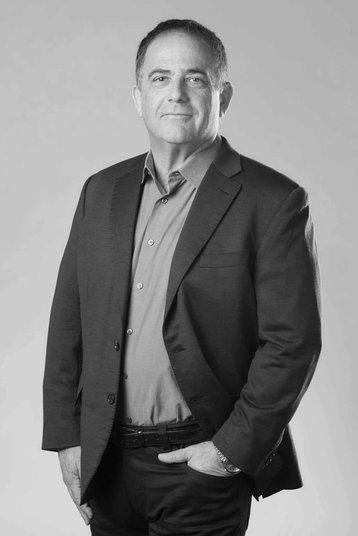
It may sound like fighting talk, but the Cato CEO respects his peers in the secure access service edge (SASE) space, while at the same time sticking to his guns that Cato remains the original and best SASE option for enterprises today.
A Cato chronology
It’s worth stepping back a second to reacquaint ourselves with the Cato story. Founded in 2015 in Tel Aviv, Israel, by Kramer and ex-president/COO – and now board member – Gur Shatz, Cato Networks was arguably first to define what would later be branded as SASE by research powerhouse Gartner.
Kramer’s career has spanned all iterations of network security, traversing firewalls on floppy disks, appliances, and cloud-based application firewalls.
With Cato, Kramer went back to the enterprise network – and saw, in his words, that the appliances overstayed their welcome. To borrow the imagery of Kramer’s favorite author, Franz Kafka, the landscape he faced was a byzantine one, where some enterprises didn’t have firewalls, and some of those who did also had software-as-a-service (SaaS) applications in their network stack.
“You know, digitally transformed organizations didn't have an inside and outside: applications are everywhere. Employees are everywhere. Data centers are in the cloud, and you really need a new solution to provide for the network security stack to be in the line of sight of the critical transactions of the enterprise, right?” Kramer said.
Hence the creation of SASE and Gartner’s baptism in coining the acronym – and then, to borrow a Kafkaesque doppelgänger motif, Cato clones began to appear.
Kramer looked back at a time when points of presence (PoPs) weren’t really a thing, building Cato from the ground up with its “controversial” vision of a SASE-based future.
“But we were able to do it," Kramer said. "What’s interesting is that nobody else since then has been able to. All of our competitors are essentially appliances on third-party cloud networks, with a single tenant host. This is not cloud architecture.”
According to Gartner, those competitors include Palo Alto Networks, Netskope, and Fortinet, who share leader status with Cato in the research giant's ranking of SASE vendors. Forrester had a different take recently, ranking Palo Alto, Netskope, and Zscaler as top performers, with the three vendors ranked above Cato.
The exec views SASE as a $100 billion opportunity for Cato to take the spoils against its peers, citing Gartner’s prediction that 60% of enterprises will implement the tech in the next three years.
By that point clients will expect “coffee-shop SASE,” Kramer said, where just as your local café offers Wi-Fi “on tap,” so SASE too will provide secure access to corporate networks and cloud applications from either on-premises or remote locales.
If anything is defunct in Kramer’s view, it’s security service edge (SSE), on which Gartner no longer runs Magic Quadrant reports.
“It’s now just a use case in SASE,” Kramer said.
An AI AIM
Besides seeing further vindication for his SASE vision, Kramer sees the next wave in security as AI transformation, something which spurred Cato’s first ever acquisition this year when it snapped up AI cybersec firm AIM Security for a reported $350 million.
“This is a completely new security stack that is very different than the network traffic and the application and data security stacks,” Kramer said. “This security stack needs to cover the prompts and responses and action of agents across the muscle of the organization. It has to build the whole lifecycle of security, from posture management to protection to detection response and back to posture.”
The Cato leader sees the AI use case covering three main buckets: the applications security teams use; the SaaS applications that employees use; and then organizations’ own custom-built AI apps, both B2B and B2C facing, including agentic AI.
“Agentic AI is still young, but it's going to be the biggest, and AIM is actually the only platform we could find that covers all three stages," Kramer said.
Kramer promised AIM Security can be bought standalone or bundled into the existing Cato Networks suite, with each version falling under Cato branding.
And while not ruling out future acquisitions, the CEO doesn’t believe that we should necessarily expect a regular routine of Cato acquiring more companies after AIM.
“We are not a Palo Alto that kind of gobbles together all sorts of point products and put them in the basket and offer it for the CISO to consume,” Kramer said, before adding: “You only do acquisitions if you're convinced that you can converge that acquisition into the platform quickly and seamlessly.”
Kramer breaks down Cato’s global client base as 50% in North America, 35% in Europe, and 15% in Asia-Pacific and Japan (APJ).
Besides the U.S., Kramer has noted Japan as early adopters of AI, while the U.K. “seems to be very, very interested” in the tech.
“It's going to be an exciting decade in front of us, with SASE reaching the mainstream finally, and AI thrown into the ring together with it. That's going to be a hell of a fight," Kramer said. “Cato will be a central player in the network security space because of the transition to the cloud ... [and] our competition is highly inferior in delivering what SASE really promises."
Fighting talk indeed.



Comments