


The University of Cambridge is upgrading to VMware Cloud Foundation (VCF) 9 as it remodels its IT self-service provision in the wake of increasing compute needs. The British academic institution also shared with this title its secret to a happy relationship with the virtualization giant.
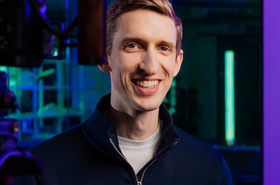
The details were shared by Nick Mathieson, server infrastructure and storage lead at the University of Cambridge, in a conversation with SDxCentral at VMware’s recent Explore on Tour event in London. Mathieson revealed the university is keeping its VMware estate in-house after discovering most managed service providers (MSPs) were running older versions of VCF under the bonnet, as opposed to the increasing number of competing solutions from Nutanix and many, many more.
“We were doing it to avoid some of the issues with the upgrade itself, the loss of functionality if we import things, and the loss of some of the data actions,” Mathieson said. “We're aware of some of the difficulties around moving from VM (virtual machine) apps to other apps. If we went with those services, we may experience some things we're trying to avoid when they go through their own upgrades themselves.”
Why Cambridge University chose VCF 9
Cambridge opted for VCF in 2021, prior to the Broadcom acquisition and its pivot of VMware cloud from perpetual licensing to a subscription-based model. The university had always used VMware in the form of vSphere; VCF marked the point where Mathieson's team stopped using vSphere only for its own internal services and began offering it to the rest of the university as an infrastructure as a service (IaaS) system. With it, researchers can choose their own services, as well as departments, which have their own IT staff who specialize in the faculty's work.
Mathieson explained the aim was to centralize commodity IT and run it cheaply and securely so that departmental staff and researchers had more time for their specialized work. High-performance computing (HPC), for example, doesn’t fall under Mathieson's purview and is instead handled by an independent specialist team within his department that offers separate services.
“We're trying to scoop up the middle,” as Mathieson put it. “We originally were geared toward the business side of the university, so departmental operations and so on, which is why we never went into the GPU side.”
Mathieson is now seeing gaps with that original service due to a growing need for the kind of GPU compute capacity that's too small or too general for a fully-fledged HPC system but which the central business IT service never used to offer.
“VCF has given us a platform where we can fill those gaps easily without having to reinvent the wheel,” Mathieson said. “You've already got a project where you're doing your business systems. Well, here's a GPU workload domain. We give you a catalog item to deploy it and off you go.”
Mathieson also suggested keeping with VCF would maintain the ease of use needed for self-service IT. Cambridge's IT don revealed his membership in Broadcom's technical advisory board where he has been contributing to the future design of VMware Virtual Private Cloud (VPC).
"That's been to improve the integration with VCF and guardrails around allowing people to do their own VPC networks and control and management of those, because we've got such a diverse network and a diverse level of skill set of the people using the service. We need them to have the ability, but with strict guardrails around it," Mathieson explained. "We didn't want to expose federated self-service via NSX directly to customers because for some of them it's an unknown or it's a level of complexity that they're not used to, whereas the automation [VMware is] aiming to put in will hopefully simplify the experience."
Bothered by Broadcom? Brake the bellyaching and open your beak
Mathieson admitted he was once part of the Broadcom dissent chorus, but said the blockers to VCF 9 are now being resolved after Cambridge cracked the code to a happy VMware relationship.
“I think that our big lesson was there's been a lot of negativity in the market around Broadcom. And I've been one of the people shouting some of it; there's been a lot of displeasure around the instability," Mathieson said. “Admins will sit in a corner moaning about the thing that they're not happy with, but actually we've got to go out and talk to someone, and talking to someone isn't easy for all of us. The only reason we have a route forward we're happy with is because we had the conversation. We didn't just sit and moan – we asked.
"We don't have all the answers as a customer," Mathieson continued. "But if they can understand our problems as a customer then they can help us resolve them, and the willingness is there as long as we engage.”
Mathieson also said that moving to another provider would have entailed paying to both build and migrate, meaning overall costs came out similar even when including service costs to the university’s British Broadcom Premier Partner Xtravirt migration partner.
The team’s relatively modest budget allows for add-ons such as vDefend Firewall; the jury is still out on purchasing others like the recently launched HyperArmor tool.
As a British institution, there may also be the cost to sovereignty with Cambridge relying on an American tech goliath. Mathieson said his team’s choice to keep migration in-house meant he felt “very secure” with VCF’s data security, especially compared to hyperscale alternatives.
“We feel like we're in control of what can be exposed to the outside world. I wouldn't feel the same control in the current environment with public cloud. [The MSP option] is probably safer. You're into contracts and the legal side now and that's probably a bit beyond my expertise, but I do feel safer having the control in our team. We like having control,” Mathieson said.






Comments