

There’s a myriad of acronyms to remember in the wonderful world of networking. From NVMe and PCIe on the high-performance side, to SASE and OSI from the realms of architecture, but if you suffer from the scourge of slow Internet and high ping, then one acronym you need to know is DOCSIS.
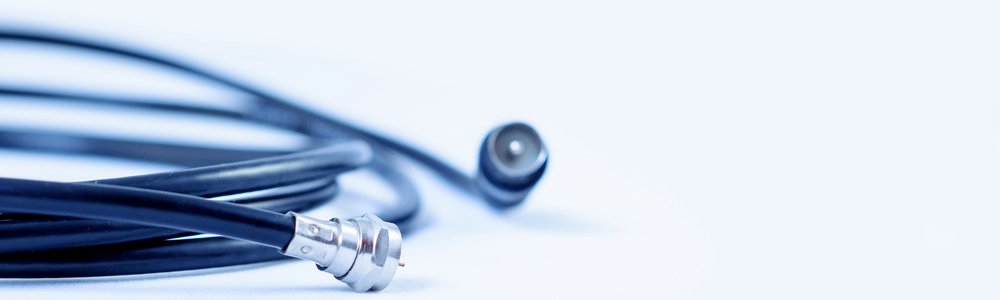
An abbreviation for Data Over Cable Service Interface Specifications, DOCSIS is the ingenious idea of taking the cables that bring TV to your home and making it possible to transmit data over that existing coaxial cable infrastructure. Introduced in the salad days of the internet back in 1997 by the folks over at CableLabs, DOCSIS has gone on to be embraced by cable television operators up and down the land.
Fast forward to today, and DOCSIS finds itself at version 4.0, with the next-generation standard enabling hybrid fiber coax (HFC) networks to support multi-gigabit speeds while ensuring low latency and improved reliability.
But DOCSIS 4.0 isn't arriving in a vacuum, as another CableLabs spec in the form of CPON (coherent passive optical networks) has been turning industry heads with its ability to support 100 Gb/s services over a single wavelength to multiple endpoints. Add to that the shifting of the U.S. government's BEAD program to de-prioritize fiber in favor of satellite and other technologies.
It begs the question then, where does DOCSIS find itself in all this?
But first, what exactly is DOCSIS?

DOCSIS is a series of technical specifications defining how operators can deliver high-speed broadband services over the same coaxial infrastructure originally built for television.
The team at CableLabs built what is essentially a rulebook for ensuring modems, cable headend equipment, and everything in between can speak the same language, allowing everything from your Netflix streams and Zoom calls to coexist with traditional cable services on the same wire.
Since its debut, DOCSIS has evolved, spanning multiple generations, each bringing substantial improvements. The standard has come a long way since DOCSIS 1.0's modest 40 Mb/s downstream speeds, with today's iteration offering multi-gigabit capabilities.
While it’s early days for DOCSIS 4.0 deployments, the most widespread and dominant DOCSIS in use today is version 3.1, providing support for up to 10 Gb/s of downstream and up to 1 Gb/s of upstream network capacity.
Debuted back in 2013, 3.1 was the first iteration of DOCSIS to feature orthogonal frequency division multiplexing (OFDM) and orthogonal frequency division multiple access (OFDMA) – modulation technologies that split high-speed data streams into smaller subcarriers in order to boost capacity and limit interference.
Check out CableLabs’ DOCSIS 101 for a truly deep dive into the technology.
The interoperability & performance push
Across the entirety of the networking landscape, the demand for interoperability and avoiding vendor lock-in is top of the line, and none more so than in the cable industry.
The team at CableLabs is looking to ensure this in the DOCSIS space via their Verified for Interoperability certification, or VFI, where they’re verifying DOCSIS 4.0 devices going into the field are backward-compatible with DOCSIS 3.1.
The idea is a simple one: enable operators to roll in new hardware or solutions gradually, without having to replace an entire stack from one sole vendor. Broadband infrastructure providers can then also mix and match vendors with much lower risk.
The organization has already hosted upwards of 10 interoperability events over the last 12 to 19 months, with vendors coming together to demonstrate just how fast the next generation of DOCSIS can push broadband internet over a single coaxial cable.
Among those early efforts, the CableLabs team, along with vendor partners, showcased DOCSIS 4.0 supporting 18 Gb/s to a service group through two cable modems simultaneously consuming 9 Gb/s each.
“The notion that DOCSIS over HFC networks can't keep up with PON, well, the proof’s in the pudding,” Curtis Knittle, CableLabs’ VP of wired technologies, said in a recent sit-down with SDxCentral. “In DOCSIS 4.0, the downstream anyway has higher usable throughput than 10G PON.”

CableLabs pops out first CPON specs
The newly released 1.0 specifications are for the physical media dependent layer and transmission convergence layer
But while 25G PON has already started to see market deployments, the fear around interoperability reappears as Knittle notes there’s currently just one vendor commercializing 25G PON OLT technology: Nokia.
“Operators hate to get locked into a vendor. So if there's not a diverse ecosystem of equipment then they tend to shy away from it,” he said. “25G PON will be challenged by the lack of having a diverse ecosystem … so when you think about the technology advancements, and you think about the fact that the network is already in the ground for a lot of operators, it's really hard for them to move off of that.”
DOCSIS expansion: The road to 3GHz
While DOCSIS 4.0 deployments are sparse on the ground, that hasn’t stopped Knittle and the team at CableLabs from resting on their laurels. One of the organization's working groups is looking to tackle an initiative to extend the upper end of the downstream spectrum to 3GHz (gigahertz), a move the firm suggests could deliver roughly 25 Gb/s peak downstream capacity.
Such an expansion won't trigger a version bump or rebrand; it's simply adding spectrum to increase capacity within the DOCSIS 4.0 framework.
Knittle revealed that such an undertaking won’t be unleashed in specification form for another 12 to 14 months from now, as the CableLabs working group is still grappling with questions around amplifier spacing, signal integrity across various network configurations, and whether operators will need booster amps or shortened span distances to accommodate the higher frequencies.
But to get a 3GHz iteration of DOCSIS over the line, arguably the most daunting hurdle is the sheer scale of infrastructure upgrades required.
The CableLabs VP reminded that in the U.S. alone, there are some 45 million taps (service connection points), a number that’s vastly larger when viewed globally. To get ahead, the industry recently established an SCTE standard for 3GHz housings, ensuring that as operators swap out taps, they're installing hardware capable of supporting future spectrum expansion.
Despite being hard at work on 3GHz, the team at CableLabs is already looking beyond. At last year's Tech Expo, the organization’s CEO, Phil McKinney, announced it's investigating spectrum extension up to 6GHz in order to further future-proof the tap infrastructure for whatever comes next.
The timeline reality
For all the technical promise of the nascent DOCSIS 4.0 and its forthcoming 3GHz variant, operators and vendors alike must contend with a sobering reality: these things take time. A lot of time.
Even with a specification release anticipated up to 14 months out, Knittle told SDxCentral that 3GHz DOCSIS 4.0 deployments are “at least three years away.”
The progression from specification to widespread deployment follows a predictable, if glacial, path that starts with product development, moving on to interoperability testing, certification, and finally field trials before any meaningful rollout begins.
“These things take years,” Knittle explained. “Years to specify, years to develop the equipment, years to work out the kinks in the equipment, and so it's not too early to get started and think about what the next 10 to 20 years look like in the DOCSIS and HFC environment.”

Claimed CommScope DOCSIS breakthrough contends with FTTH
Vendor reports downstream speeds of 16.25 Gb/s
But to top off the concept of specification development is the sobering reality that specifications never truly die. While the team at CableLabs is hard at work looking ahead in the world of DOCSIS and version 4.0, they still continue to refine and update the DOCSIS 3.1 spec – a standard that debuted all the way back in 2013.
“A spec never actually dies,” Knittle said. “There are always things being discovered … there are still things that we could do on DOCSIS 3.1 that we might do because it’s so widely deployed. And if it's a software download to these devices, well, why not? It really never ends. And in parallel with all of that, we’re looking at things and capabilities that might be in a next generation.”
The future of DOCSIS and HFC isn’t solely about pushing capacity, though, as it’s also about enhancing the quality of actual connections.
The VP revealed that CableLabs is starting to look at ways of defining L4S (Low Latency, Low Loss, Scalable Throughput) over PON in order to bring true end‑to‑end low latency to mass‑market broadband.
L4S is a key standard built for efficiently reducing buffer delays. And while such a concept might benefit applications like cloud gaming and virtual or augmented reality, Knittle outlined that it could help an altogether more compassionate use case: assistive smart glasses for the visually impaired.
“Blind people [can] wear these glasses and then, in a low-latency manner, somebody is actually watching what they're watching and helping them navigate the world. That’s pretty cool and much more altruistic than cloud gaming.”
So for all the work that goes into the broadband arms race, that altruistic worldview shows the work of CableLabs isn’t just about making bigger numbers show up on a speed test, but making those connections matter.






Comments