


LAS VEGAS – T-Mobile US touted robust network slicing scenarios at the recent Las Vegas Grand Prix, including powering a public-safety network newly Chief Enterprise Officer Chris Sambar crowed put similar offerings from rivals to shame.
T-Mobile US CTO John Saw explained during an interview at the event that the carrier has been working with the event organizers since this iteration of the Formula One (F1) series began racing in Las Vegas in 2023, with this year’s event its largest to date. That support includes running back-end networking support for thousands of connected devices linked into the carrier’s 5G network with that access doled out via “thousands of slices,” each of which had “different attributes.”
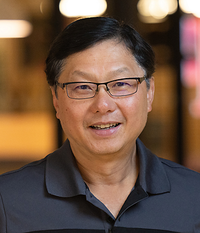
“That's the nice thing about creating a bespoke connection. It has different speed attributes, different latency attributes, different security attributes, and different prioritization attributes as well,” Saw explained. “So we have nine different flavors of slices out here, and it's a different slice for a first responder who needs higher prioritization. It's a different slice for a robot; it has different needs. Definitely a different slice for a point-of-sale terminal where you we have 1,300 of them, and a different slice for ticket entry terminal.”
This deployment helped clear up what had been a bevy of cabled connections.
Saw noted that for the 2023 event, “we said, ‘hey, you don't need to run all those cables or all those point-of-sale terminals, … we can do better. We can just do a network slice,’” to which Saw said the F1 organizers responded, “yeah, yeah. Why don't you just try it at this T-Mobile zone with your own zone? If we ever screw up, it's your zone, anyways.’”
Saw explained that T-Mobile US for that first night trial started with 99 network slices, a trial that went well enough that carrier engineers wanted to do 300 slices the second night. “Today, we are powering the entire race,” Saw added.

That powering is based on T-Mobile US’ already installed macro network in the area, with the only physical addition being the deployment of a large cell-on-wheels (COW) standing proud on top of a nearby parking garage. That COW includes several antennas supporting the carrier’s various spectrum bands in use in the area, with an emphasis on its 2.5 GHz spectrum bands central to the carrier’s 5G network capacity.
Saw also said the carrier also tapped its deep millimeter-wave (mmWave) spectrum holdings in the 24-MHz band to support streaming of broadcast content from cameras around the circuit. “It has the latency and the bandwidth,” Saw noted on the performance and capacity of that spectrum band.
That capacity also allowed T-Mobile US to bypass use of its recently introduced Dynamic CX platform. That offering uses AI to help predict and manage network resources for major live events and other high-density locations, with that platform launched tied to this past summer’s World Cup events in the United States.
“We have so much capacity in Vegas, we don't need to use Dynamic CX for things like that,” Saw said.
Enterprise education and public-safety support
T-Mobile US also used the Las Vegas Grand Prix deployment to deepen its push into the enterprise market, a push that gained speed earlier this year when it hired Sambar after he had left rival AT&T in late 2024. Sambar had spent two decades at AT&T, serving a president of networks and helping design and deploy that carrier’s FirstNet public safety network.
Sambar politely noted that he came from “one of the other two carriers,” and “they think in terms of wireline and wireless are kind of two distinct networks.” But, that model is different at the more wirelessly focused T-Mobile US, which used that platform to show off enterprise-focused private network offerings at the race.
“We managed to figure out how to do all of these things that traditionally you think of a wireline network has to be there to do, but we managed to do them wirelessly,” Sambar said. “Private networks are a great idea. A really robust macro network that we have here, we're able to do things, and so T-Mobile for Business has a number of customers here.”
Sambar also touted the performance of its network-slice enable T-Priority service compared to that of rival offerings from AT&T and Verizon (Frontline). This included references to on-site speed tests showing T-Mobile US’ network providing significantly higher network speeds compared to those rival offerings, advantages that Sambar said are increasingly important to the public-safety community.
“The minute something happens and a bunch of first responders show up, 50 Mb/s is not going to be enough and that network is going to congest, and it's going to come to its knees,” Sambar said of what those rival networks were providing. “Our network has plenty of capacity. And the way [Saw] designed T-Priority is that the preemption of priority will expand across the TDD (time-division duplex) band … 200 megahertz and so first responders are going to have no issue, and that's what we want. We don't want them to have an issue because they're the ones who are taking care of us.”


Comments