

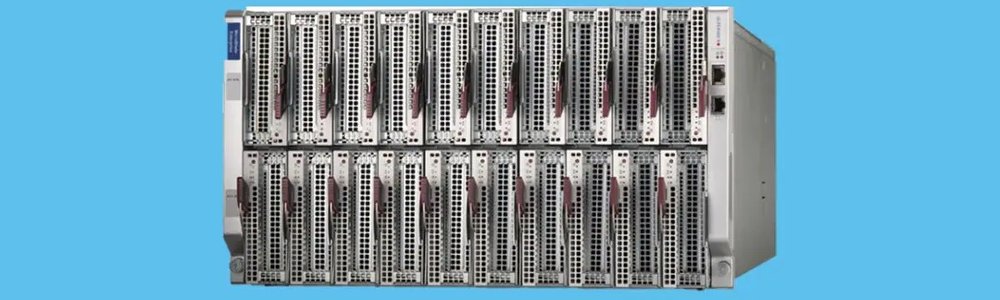
Supermicro unveiled a multinode CPU server system that provides operators with a flexible way to run multiple applications.
The 6U MicroBlade is powered by AMD’s EPYC 4005 series CPUs, housing multiple independent nodes packed into a shared chassis.
Touted as a cost-effective solution, the server effectively allows operators to have multiple blades, each acting as its own server running virtual machines (VMs) or workloads independently while sharing power supplies, cooling fans, and network switches in the chassis.
“This addition to our successful EPYC-based product line provides a very cost-effective, green computing solution for cloud service providers,” Supermicro CEO Charles Liang explained. “A single 48U rack can have up to 160 servers and 16 Ethernet switches, enabling tremendous computing power with built-in switches per enclosure.”
Supermicro’s new MicroBlade server comes as operators are looking to meet the increasing demands for AI workloads, while maximizing infrastructure capex.
According to Supermicro, the 6U’s ability to run individual blades independently helps to reduce complexity, with suggestions it could provide up to 95% fewer cables and up to 70% less space. When compared to 1U racks, the vendor also claims its new 6U line offers 30% energy savings
Supermicro’s use of AMD’s flagship CPU line further aligns with its cost-saving claims, as operators look for hardware solutions capable of powering AI workloads without the need to invest in high-end GPU-based systems.
AMD unveiled the 4005 series back in May, which offers up to 16 cores per chip. Demand for the chipmaker’s EPYC has been a leading driver of its recent revenue rises, with cloud providers looking for alternatives to both Nvidia’s GPUs but also Intel’s slipping control of the processor market.
In addition to sizable cores, AMD’s chips provide Supermicro’s 6U servers with 192 gigabytes (GB) of DDR5 memory. The new MicroBlade can also hold up to 20 individual server blades, as well as two Ethernet switches and two management modules.
It natively comes with a dual-port 10-gigabit Ethernet (GbE) network switch, which the vendor claims helps to simplify network topologies to enable more server instances per rack.
“We designed the AMD EPYC 4005 Series CPUs with our system partners in mind, creating a processor that enables them to develop differentiated, cost-effective enterprise solutions,” Derek Dicker, corporate VP for AMD’s enterprise and HPC business, noted. “The memory and I/O feature sets, combined with our latest ‘Zen 5’ architecture, give our technology partners the flexibility to create powerful yet affordable systems that meet the specific needs of growing businesses and dedicated hosters.”


Comments