


NTT DoCoMo unveiled a network-centric AI cluster across Japan powered by its all-photonic network (APN) technology concept.
The "GPU over APN" testbed is a wide-area distributed graphics processing unit (GPU) demonstration environment leveraging its Innovative Optical and Wireless Network (IOWN), a concept devised by the mainline NTT Group. According to the Japanese giant, APN's high-speed, low-latency optical connectivity links distributed AI data centers to better support both large language model (LLM) training and inference. The approach reduces the need for massive, centralized data centers by allowing workloads to be distributed across smaller facilities powered by locally available renewable energy.
With GPU over APN, GPUs are distributed across data centers in the Japanese cities of Sapporo, Kanazawa, Fukuoka, Osaka, alongside four locations in the Tokyo metropolitan area: Akihabara, Mitaka, Kawasaki, and Yokohama. The GPUs are compatible with virtual machines (VMs) and Kubernetes, and can be provided in a multitenant configuration.
NTT's operator arm touted verification of advanced AI workloads using remote direct access memory (RDMA) to enable 100 Gb/s connectivity. In one example, DoCoMo claimed the system can transfer 25-gigabytes of data in two seconds across the 621 miles between Fukuoka and Tokyo.
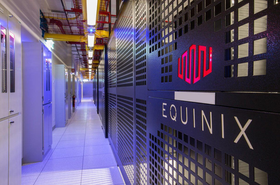
DoCoMo's venture follows another by NTT's region-specific operator NTT East to connect Sakura Internet's Ishikari data center with Equinix Japan facilities in Tokyo.
Those three partners will evaluate key network metrics such as throughput and latency across a live Hokkaido-to-Tokyo connection to establish the operational parameters required for commercial rollout.
NTT's IOWN-APN concept also saw further development this month with its establishing of an "IOWN-AI" fund aimed at building out the IOWN ecosystem.
The fund was formed with Taiwanese operator giant Chunghwa Telecom, South Korean conglomerate SK Group, and the Development Bank of Japan, and is expected to raise approximately $500 million. The likes of Fujitsu, Global Foundries, KDDI, NEC, Samsung Electronics, and Toshiba were named as likely investors in the fund.





Comments