


AT&T’s multi-year software-focused network overhaul has provided the carrier with increased operational efficiency, but CEO John Stankey said the real benefit has been in increasing AT&T’s service offerings in the market.
Stankey told investors during AT&T’s most recent earnings call that the carrier is “investing at high levels in our software technology base,” which has allowed AT&T to be “more agile in the market.”
“We're getting very large increases in our productivity for the software we're developing, writing right now, so we haven't pulled back our investment because of those effectiveness or efficiency savings, we're getting more done, and we intend to get more done because there's a lot of good opportunities to apply improvements in software and how we change our processes than what we've traditionally been able to fit through to fund,” Stankey said of that change.
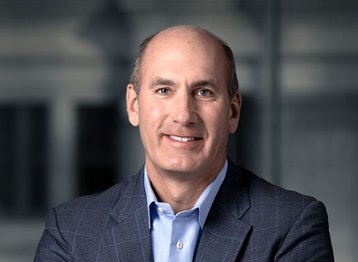
Those improvements have included disaggregated hardware changes based around AT&T’s $14 billion open radio access network (RAN) initiative, and 5G equipment modernization changes that has the carrier replacing legacy Nokia equipment for new Ericsson gear. Stankey had previously noted that last move has allowed the carrier to unlock new service opportunities, with the broader move slashing the overall cost of network deployments.
“The fact that we're building open interconnection at that point of the network means that we can have a competitive process of how those radios get built and how we think about them, and that probably allows us to build it less expensively than we might have five years ago,” Stankey told attendees at an investor conference late last year.
Stankey explained at that event that the open RAN program has allowed the carrier to “collapse all of our routing infrastructure on a common architecture.”
“So whether it's a mobile core or it's a business core, whatever it might be, that's all on a homogeneous, consistent routing infrastructure, on general purpose compute that dramatically lowers costs associated with that. That's a big damn deal, because it allows us to treat products differently,” Stankey added. “Associated with that, and when you start to open up those interfaces and capabilities, you have the ability to build APIs into your network that allow for your customers to use it more effectively, and have the flexibility … all that work is underway right now, and we feel really good about where it's taking us.”
More spectrum and AI
AT&T also recently boosted its 5G-focused moves by acquiring new spectrum licenses from EchoStar. That has allowed AT&T to more aggressively target spectrum-dependent fixed-wireless access (FWA) services targeted at the consumer and enterprise space.
The carrier has also increasingly tapped AI to help with planning network deployments, a move highlighted by the recent launch of its Geo Modeler system. The carrier explained that system uses synthetic data and a network foundation model to simulate and predict network coverage “under dynamically changing network and environmental conditions.”
Analysts have pointed to the benefits AI can bring to the deployment and management of cloud-based open RAN networks, which are more complex orchestration challenges due to the disaggregated multivendor ecosystem. The use of AI could help close performance gaps for open RAN architectures compared with legacy RAN models.
Stankey noted that these moves have positioned the carrier to extract more value from its network moving forward.
“We did a nice job [in 2025] in managing our cost structure and business … and I will tell you that that's an artifact of us having been able to do some more work on software to improve our labor cost-structure in that area than what we probably would have guessed we could have done 24 months ago,” Stankey said during the latest earnings call. “So we kept investment levels up, we use that extra capacity to go do a few more things, we get benefits from costs on it, and I guess the good news is, and I think my team's tired of me hearing about it, is I keep turning over rocks and seeing more opportunities to go after things, and we go after things, and I'm not worried about running out of rocks to turn over. … I think it's just a matter of us executing.”




Comments