

Industry trade shows were always going to be a 2021 wild card. Would there actually be any live events? Would they remain virtual? Would the hybrid model work? What about all of my travel points? And free drink tickets?
As we witnessed, the answer was mixed to all of these. Yes, there were eventually live events, though at a much reduced scale. Yes, a lot of them remained completely virtual. And yes, the hybrid model did sort of work. (And let’s just say that I never received any real value for my travel points or drink tickets.)
I can say for myself that I came into the year with no expectations for live events. Sure, vaccines had just started to trickle out, but I was pretty sure that at least the first half of 2021 would still be a Zoom-fest, and in general I don’t have the brain capacity to plan for anything more than six months in advance.
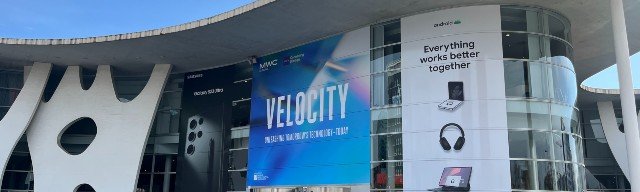
Virtual events did dominate the early going as there was no real way to conduct a safe in-person event. (Cough … MWC Barcelona.) Vaccines only began trickling out to the public – and only to wealthier nations – and the travel infrastructure was still in lockdown.
These events built on the painful learnings of 2020, when event organizers scrambled to migrate their shows into a virtual environment that we quickly found out was not prepared to support such events. For the most part there was a lot less buffering, speakers and presenters seemed to get the hang of how to unmute their computer microphones, and complete event crashes were rare, though still hilarious. It really was a great stress test for software-as-a-service (SaaS) platforms running in cloud environments.
Virtual attention
But most importantly, the audiences were still OK with sitting in front of their computer monitors all day to attend.
Of course, that level of patience began to quickly wear thin as it seemed event organizers realized that putting on a virtual event was much less expensive than a live show, and thus: more shows! Within a few months, virtual conferences were popping up like springtime weeds with multiple events seeming to overlap every week.
In the old days this was easily dealt with by only being able to be in one place at a time. But in the virtual world, all you needed to do was open up a couple of new windows on your computer and suddenly you were in multiple places at once.
This was fun for like 17 seconds before reality set in: It’s hard to focus on multiple events at once.
This also highlighted that virtual events lacked the live energy a real one provides. While the presentations have typically been very clean and concise in terms of the information a speaker or organization is trying to get across, many are often very monotone in nature, which combined with sitting in varying states of dress and a climate-controlled viewing environment led to a lot of mental drifting.
This was rarely the case when sitting in some large conference center where the chairs were borderline torture devices, business attire demanded some form of straight posture, and the air conditioning was set to “arctic.”
Ray of trade show hope
Attendance options did begin to open up as the weather warmed, with some events beginning to welcome back attendees as part of a hybrid model. Most of these seemed to be from events that were key to their organizer’s financial stability. It’s very difficult to charge attendees thousands of dollars to attend a virtual event they can attend in their underwear, and exhibitors hundreds-of-thousands of dollars to sponsor an event that can’t guarantee a level of attention or information.
These events were run under the guise that there would be “enhanced” cleaning efforts at the locations, that attendees would need to present some sort of health certificate, and that those attendees would be required to wear masks throughout the event. There were also efforts to “cap” attendance levels in an attempt to show that organizers were serious about protecting attendees. But in most cases attendance levels were limited by the number of people that felt comfortable attending.
In reality, these hybrid events were really virtual events with a smattering of folks spread across a large venue.
We here at SDxCentral did not attend any event last year in person, though as the year went along there was an increasing desire to do so. This was driven by the decreasing desire to participate in any more events virtually, and to some extent by the saturation of virtual events leading to a watering down of their substance.
Where are my pants!?!
This roller coaster appears set to continue in 2022. Large corporations are already either limiting or backing out completely of attending CES during the first week of January. The show is still set to go on, but will follow the hybrid model.
The annual RSA security conference, citing Omicron concerns, has already pushed its plans for a hybrid event from early February to June in an attempt to potentially draw more in-person attendees.
The next bellwether will be the telecom-focused MWC Barcelona event currently scheduled for late February. GSMA, which organizes the event, shuffled its cards this year in an attempt to juke around Covid hot spots, but those efforts still resulted in minimal live attendance. This year, the organization is again attempting to pull off its events in a “safe” manner.
I can’t believe I am typing this, but I sort of do miss the energy that comes from being on the ground and taking in the sights and sounds of a live event. I do hope that at some point soon we will again be able to meet face-to-face with all of you. However, I suspect it will be well into 2022 when such a hope is realized. That should give me just enough time to find where I put my dress pants.
Comments