

Since the infamous Sam Altman tweet in November 2022 unveiling ChatGPT to the world, the creatively minded have largely lived with a sense of dread over everything from copyright and misuse of their work for training data to job security.
Actors went on strike, infringement lawsuits were filed, and even datasets poisoned through means like Nightshade. But while wholly AI-animated movies haven’t exactly taken off, and AI-generated “art” always has that uncanny off-putting sheen to it, the one place the technology has proliferated is the humble restaurant menu. Across the world, they’ve appeared like the plague; an epidemic of slop that’s all but pushed genuine graphic designers, photographers, and food stylists to one side.
Restaurant menu making isn’t exactly what one might call art, but there’s an inherent science to it, blending together everything from sensory language and visual hierarchy to business strategy. It’s a clear example of actual creatives and experts being forced to make way for business owners wanting things faster and cheaper.
While restaurateurs' use of AI seems to be having a detrimental effect on their business – growing evidence suggests that customers are turned off by the increasingly bizarre graphics – one creative field where the technology seems to be producing quite the opposite result is the chip design space.
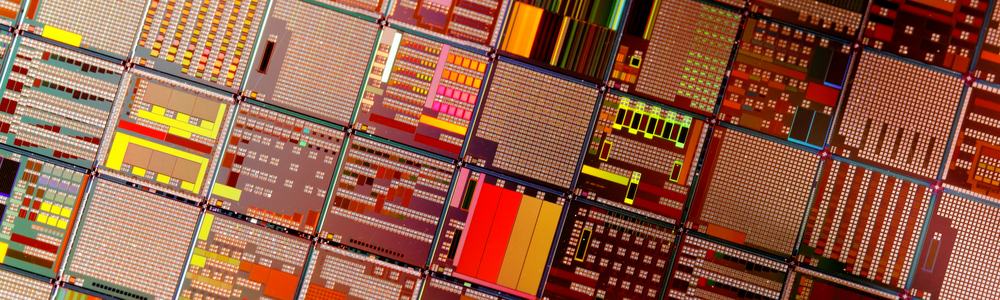
Semiconductor design is as intricate an art as any other creative endeavor. In the 1960s, circuits were hand-drawn before moving to early computer-aided design (CAD). Today, though, electronic design automation (EDA) software is used to design and simulate chips prior to production.

But like every software solution of late, AI has to be infused somewhere. Ravi Subramanian, Chief Product Management Officer at EDA giant Synopsys, outlined that unlike other industries, their journey predated that infamous tweet.
Synopsos started a little under a decade ago with reinforcement learning used within tools and later adopt generative AI to create code or test benches. Today, it’s the turn of agents to assist with and automate certain pieces.
But those agents are still evolving, becoming what Subramanian describes as “long-horizon agents” capable of orchestrating more of the workflow.
“We are really going from electronic design automation and some assistance, and then going from assistance to autonomy. And we're just at the beginning of that journey, and we are all learning about how that works," Subramanian explained.
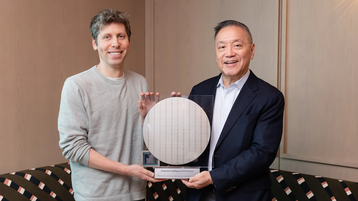
The industry is seeing some of the fruits of said labor. Synopsys is working with none other than OpenAI to pair the latter’s so-called “frontier intelligence” with EDA tools to improve chip design.
The aptly named GPT‑Synopsys is a model dedicated to EDA workflows, grounded in domain knowledge to directly operate Synopsys tools. Human engineers can delegate design objectives, with a Synopsys press release going so far as to describe it as “a native expert user,” one that can enable engineers to “explore more design alternatives and optimize power, performance, and area (PPA) to rapidly deliver more sophisticated designs.”
In a sense, making EDA tools more intuitive could allow for more companies to design their own chips. Once the folly of hyperscalers, now AI labs are among those getting into the XPU space.
Before GPT‑Synopsys was a thing, OpenAI engineers used AI models to aid in creating its Jalapeño chip, a development process that reportedly went from initial design to manufacturing tape-out in just nine months.
Subramanian pointed beyond the realm of AI to automotive, agriculture, and medical-device firms developing compute roadmaps, and said the technology could help more people create architectures and use EDA tools effectively.
“We believe the ability to have expertise on how to use the tools well and make the engineering workflow easier will enable, at a minimum, the front end of here's a spec, and here's a description of a[n] architecture that meets a certain power performance area is going to expand," Subramanian said.
Where asking an AI to design a restaurant menu differs from its use in chip design is in unconstrained generation, or rather a lack thereof. Subramanian stressed that it should be an assistant, with work routinely checked against physics and by actual human engineers and not left alone as an unchecked creator.
“We believe in the power of AI, but in physics, we trust. That's foundational for EDA,” Subramanian said. “When a solution is provided by AI, even for a part of the problem, human-in-the-loop is a necessity today, and that is a fundamental part of chip engineering. As you say, it's an art, and there is a human involved in that. The automation and autonomy in making some of the decisions and reasoning always is getting checked.”
While automation in certain workflows will inevitably expand as confidence grows, the exec argues that risk increases in direct proportion to how closely a concept relies on physical phenomena.
“When it comes to language-based industries today, AI actually can become the creator because of the language-based nature of that," Subramanian said. "As we get to more complex things, it becomes harder for AI to be the creator of the product. AI will be a very good assistant, and the complexity of what we have in this world is not insignificant despite the trillions of parameters we talk about.”
That inherent complexity in everything from GPUs, CPUs, and DPUs for the likes of AMD and Nvidia who annually pump out designs just to get the foundry to sign off requires an enormous amount of work that is not limited to electrical checks. Analysis spanning mechanical, thermal, structural, and electromagnetic aspects of a chip all needs to be achieved before a manufacturing partner will even think about putting it into their factory.
In Subramanian’s view, that’s a heck of a lot more processes than what was required only five years ago. So for having AI as a tool or an assistant, the argument from the Synopsys exec is that even the art of the past is “not enough” anymore.
“The best artists of the past are having a big challenge in addressing this. There's a lot of work left ahead," Subramanian said. "But it is this whole interaction of, it used to be EDA for designing CPUs and CPUs to help design EDA. Now it is AI to help design chips and then chips to help design AI.”





Comments